Work
Paati-Veedu
Paati-veedu in the Tamil language means grandmother’s home.
Having lived in a multilevel home with limited light, ventilation, and disjointed spaces, our client wanted a house on a 40×60 ft (2400 sq. ft.) property with the north side facing the street.
Our brief required a humble, traditionally inspired, and secure home with natural light and ventilation, along with visual and physical connections between family spaces.
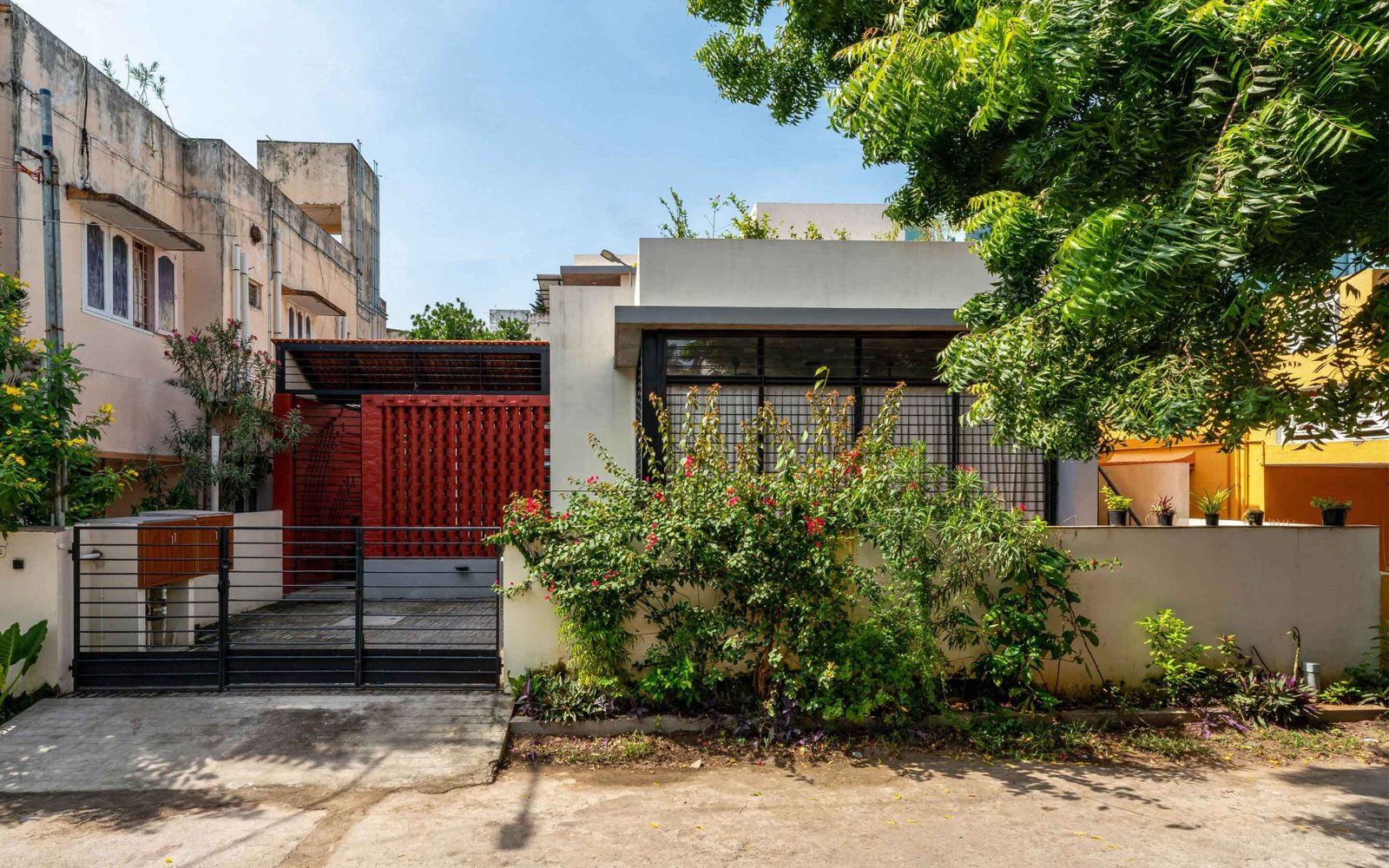
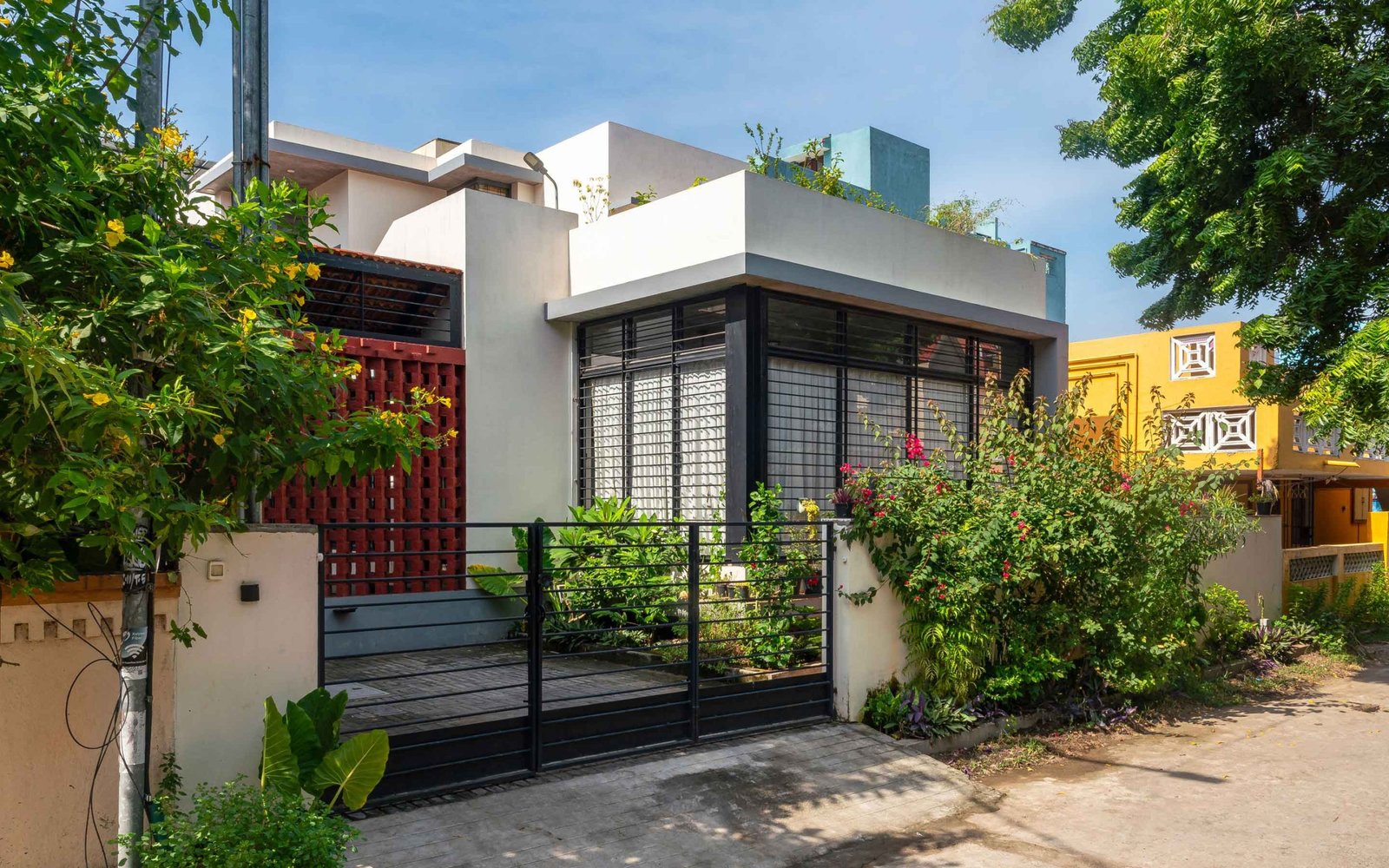
We designed a home that is open, secure, and feels private. Trying not to impose the presence of this building, the horizontal grill lines on the façade alongside the extended floor slabs make the house appear floating and speak airy and light.
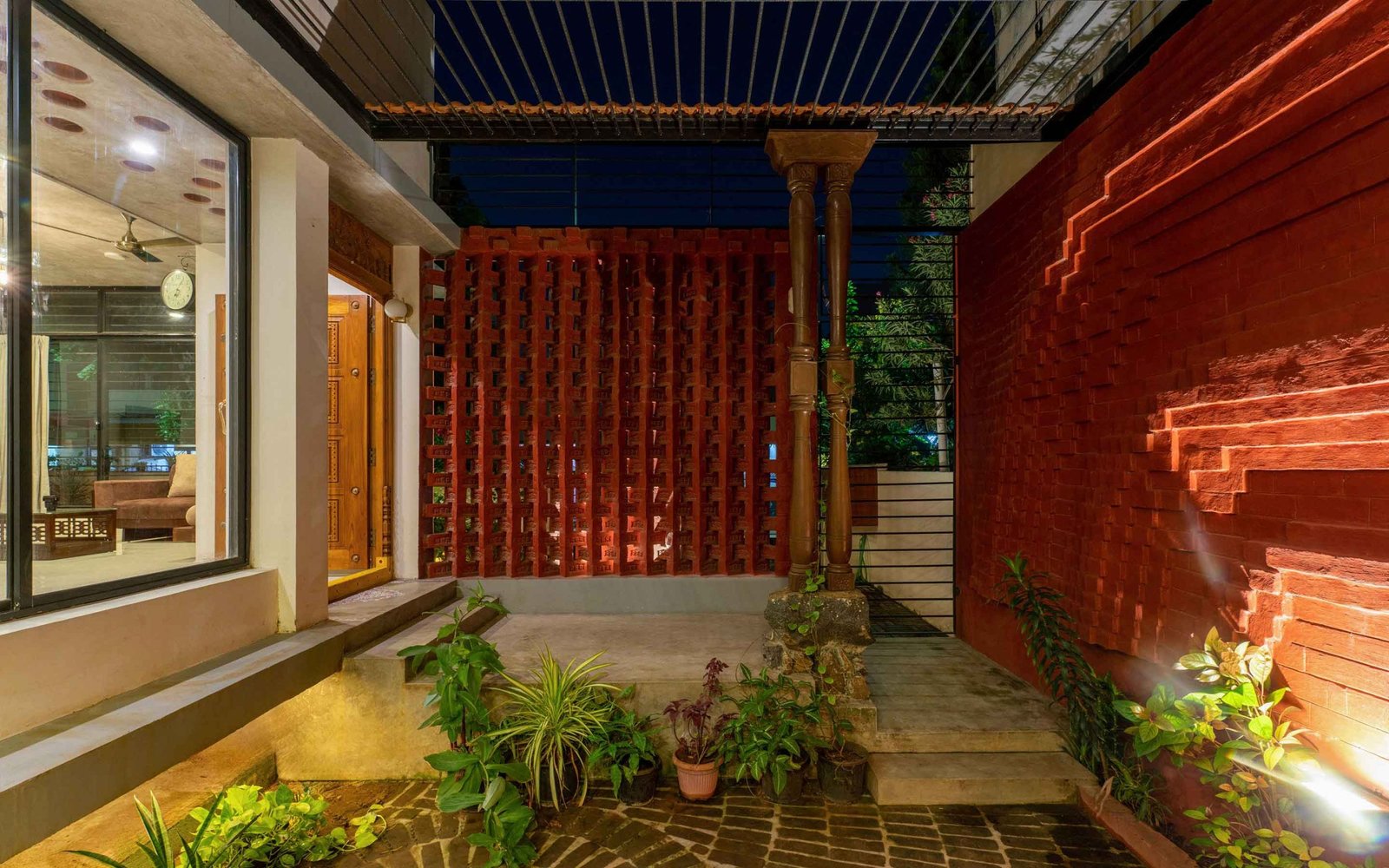
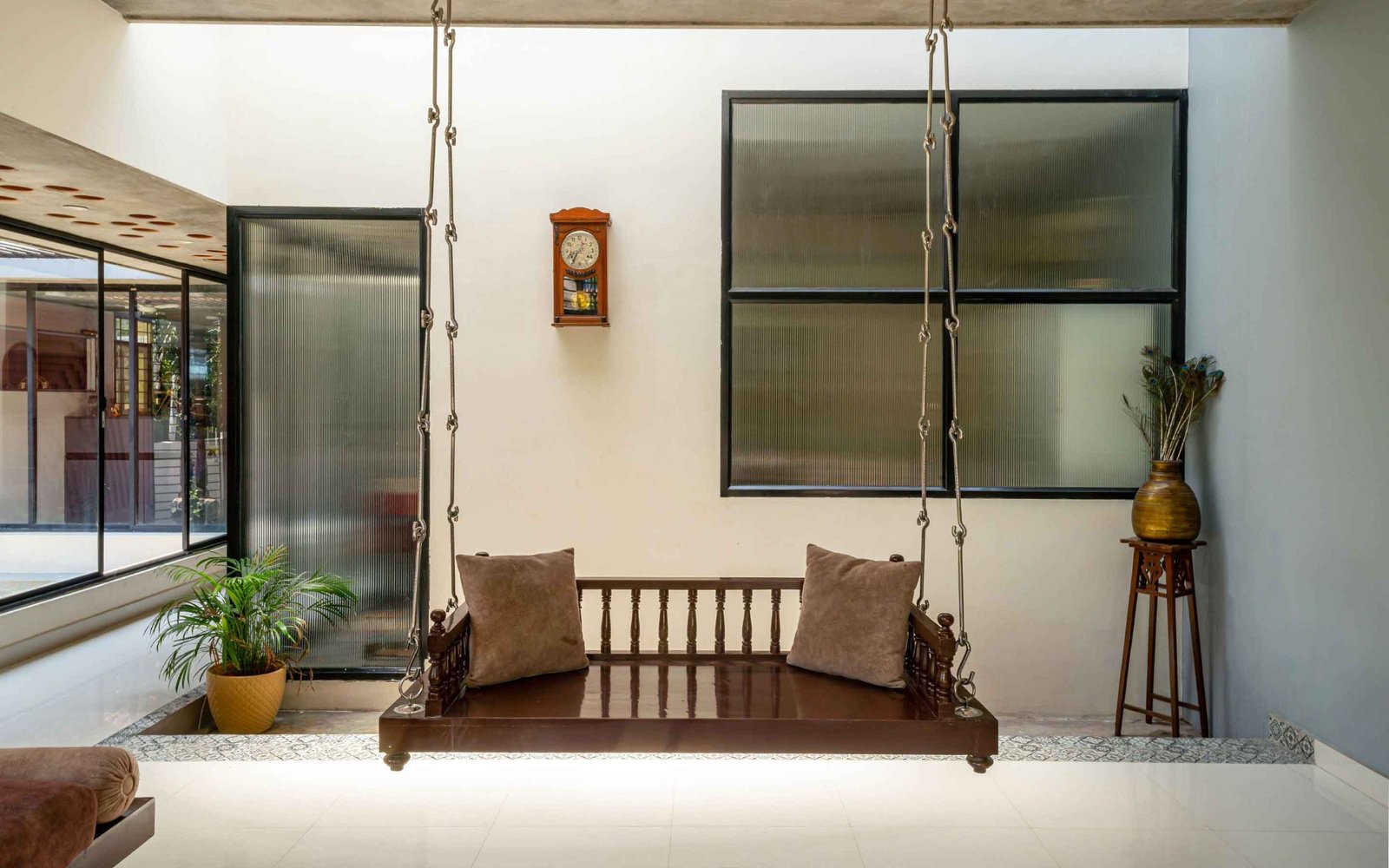
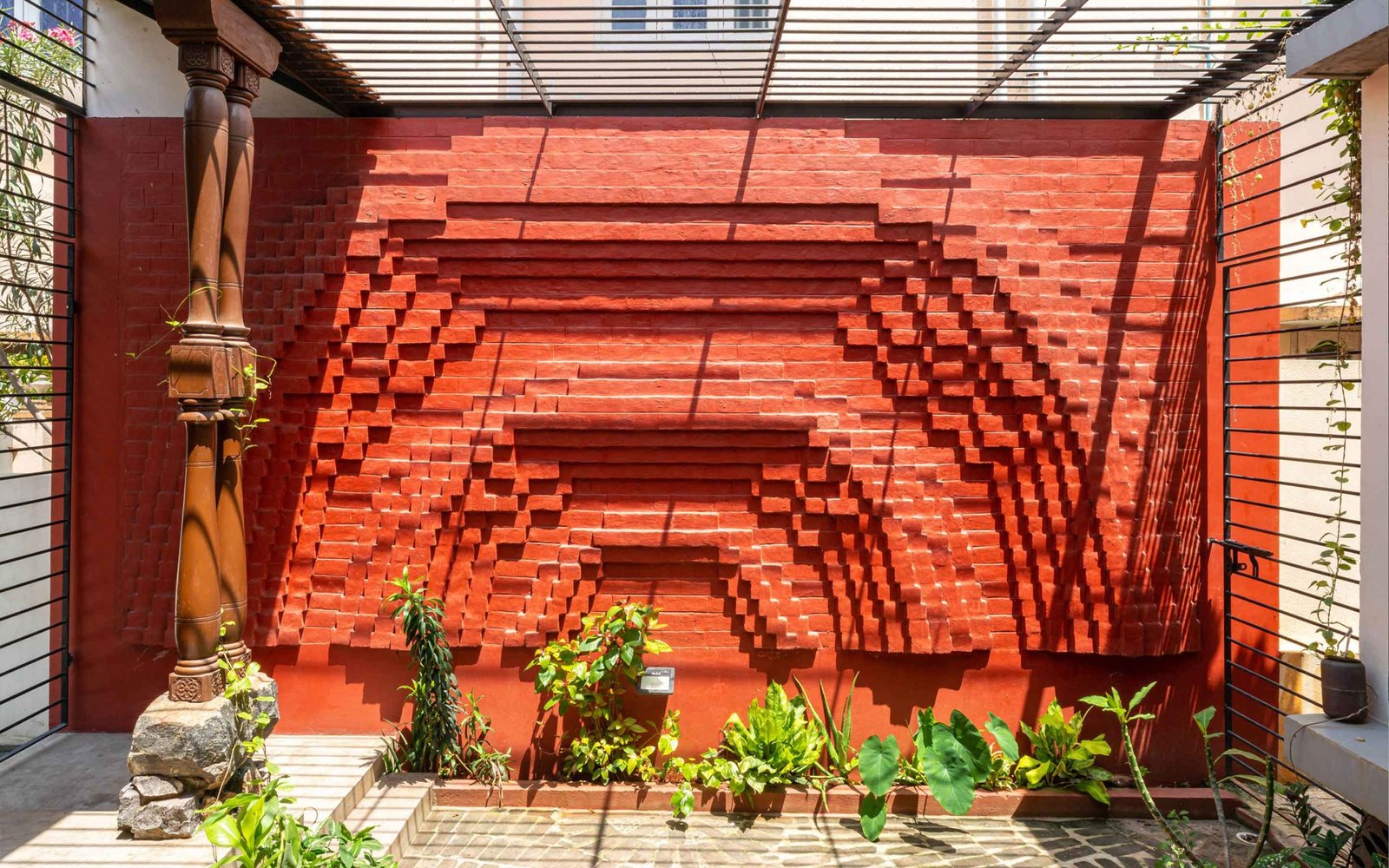
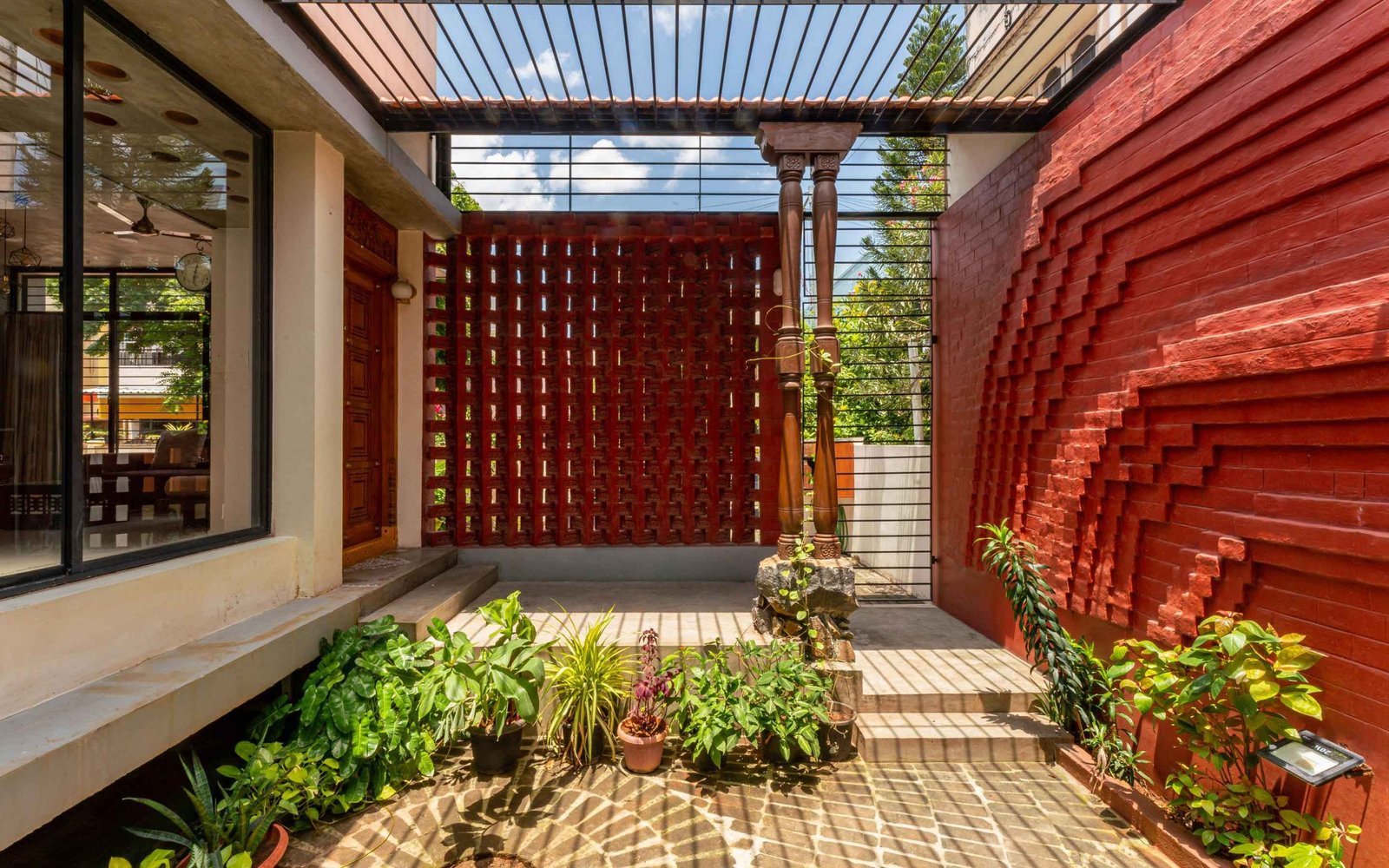
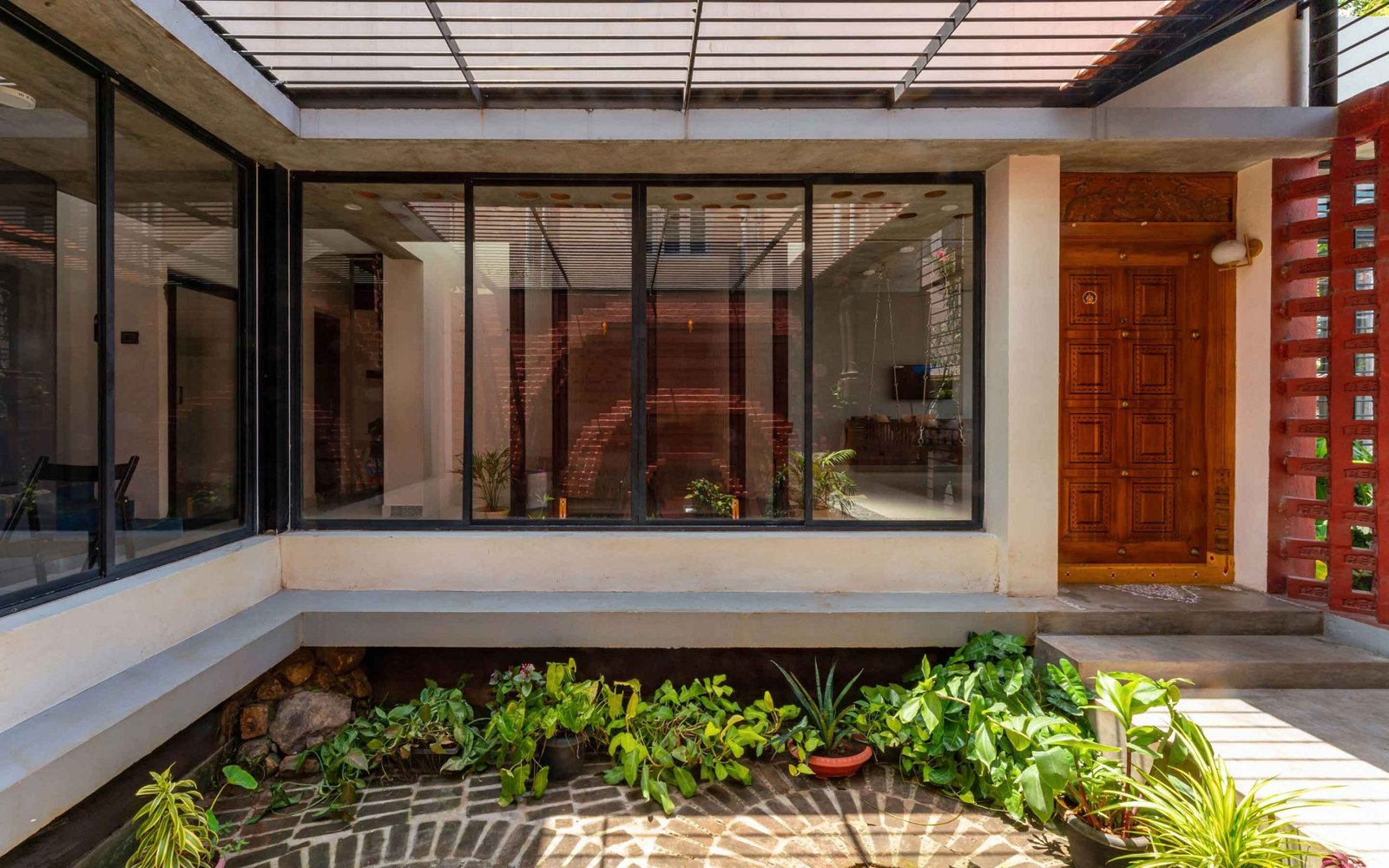
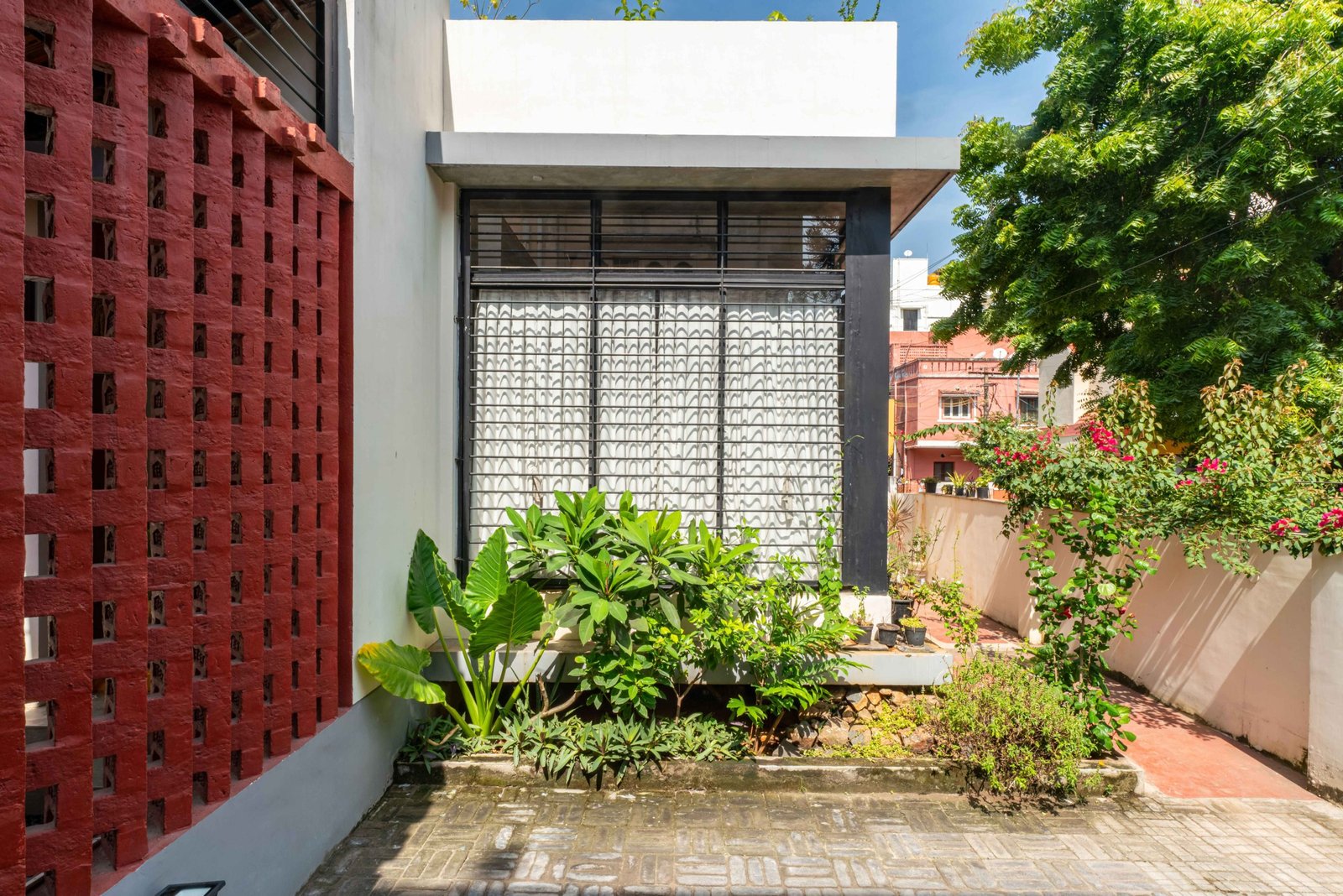
Inspired by traditional courtyard houses from the region, we consolidated nostalgia with modernism. The Thinnai (in Tamil verandah looking to the street) was intentionally made to look inward to the courtyard for privacy and to function as a social space exclusively for family. Locally sourced kiln bricks were used for a screen wall that separates the parking lot and courtyard. A weave pattern was devised to let in the northeastern sunlight whilst providing privacy and security from the street.
The spaces were designed for their visiting grandchildren to socialise and bring in elements of nature physically or abstractly.
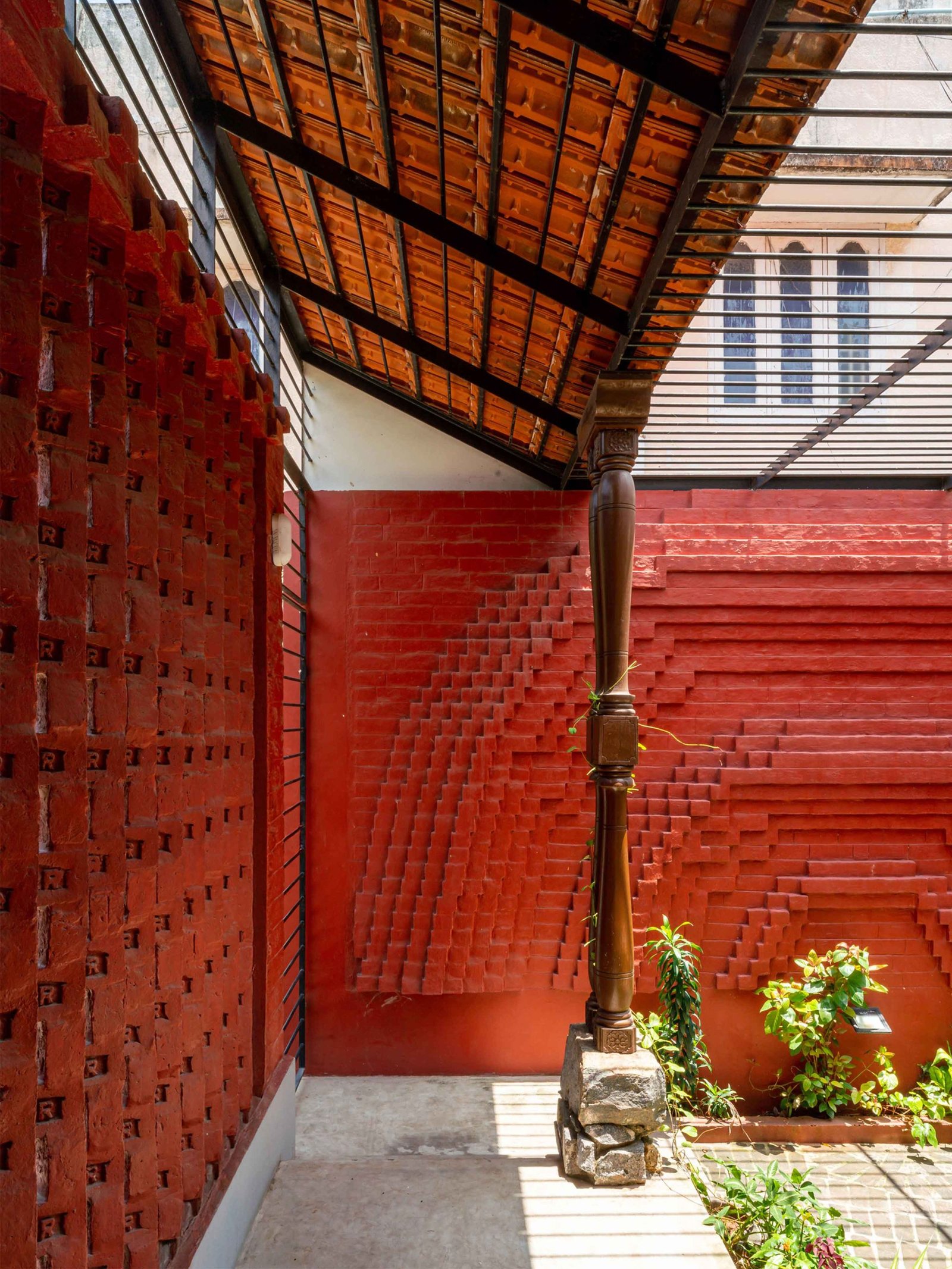
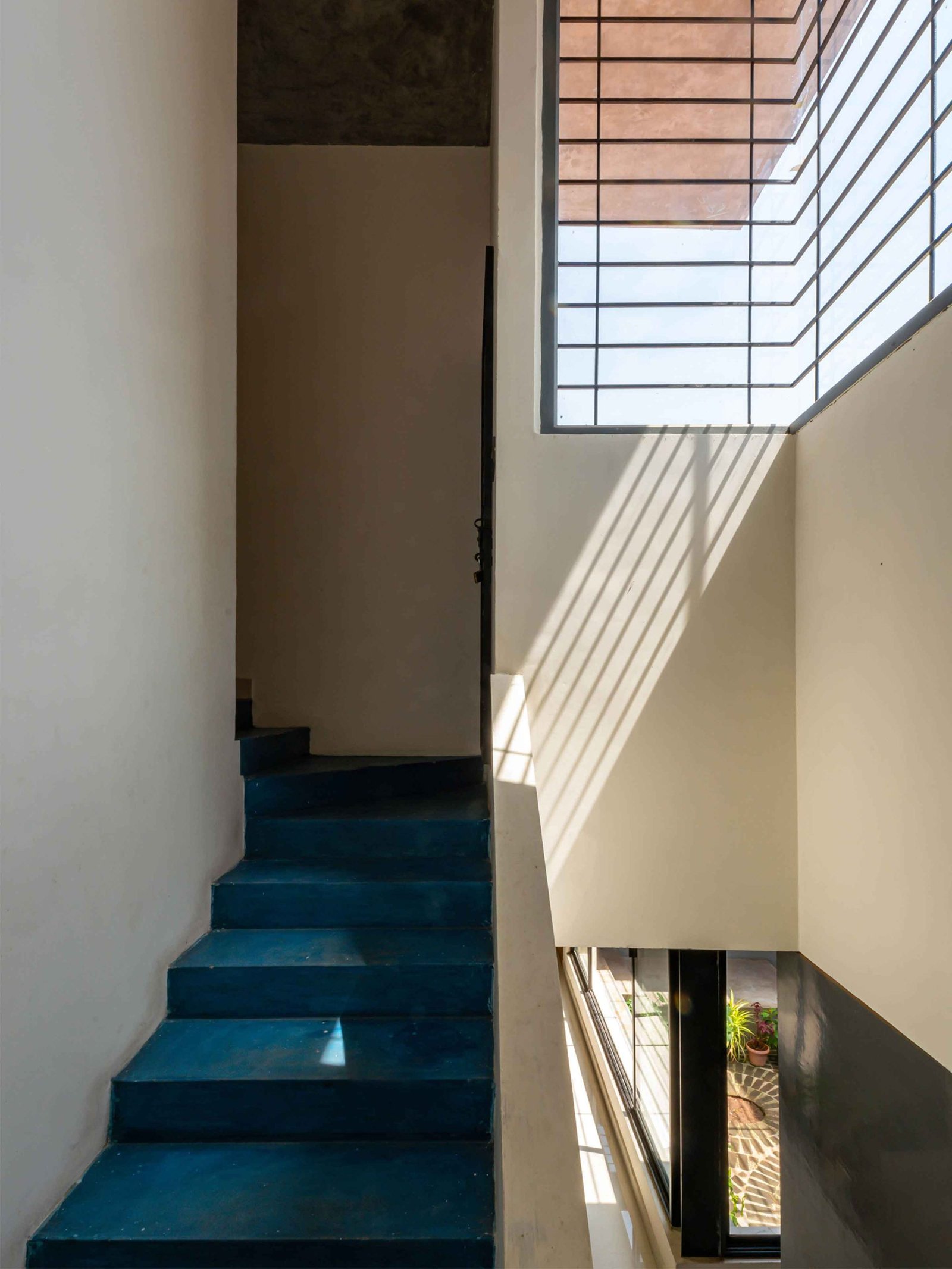
The abstract representations of five elements in Paati-veedu are the arrangement of bricks to form a rising sun on the east side courtyard wall depicting fire, the staircase made with blue oxide representing water, the use of red colour for earth, and physically with open flowing visually connected outdoor and indoor spaces expressing space and air.
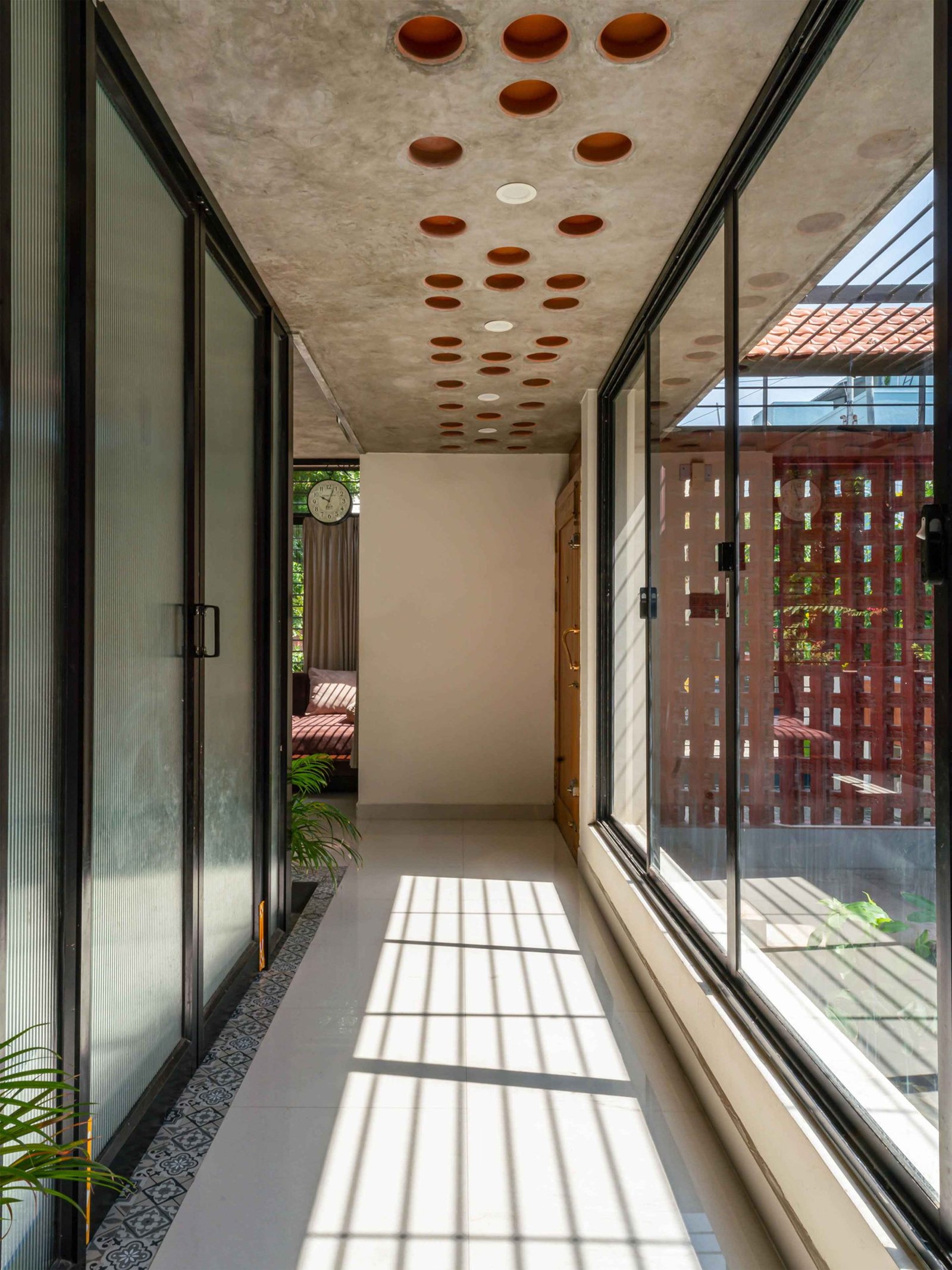
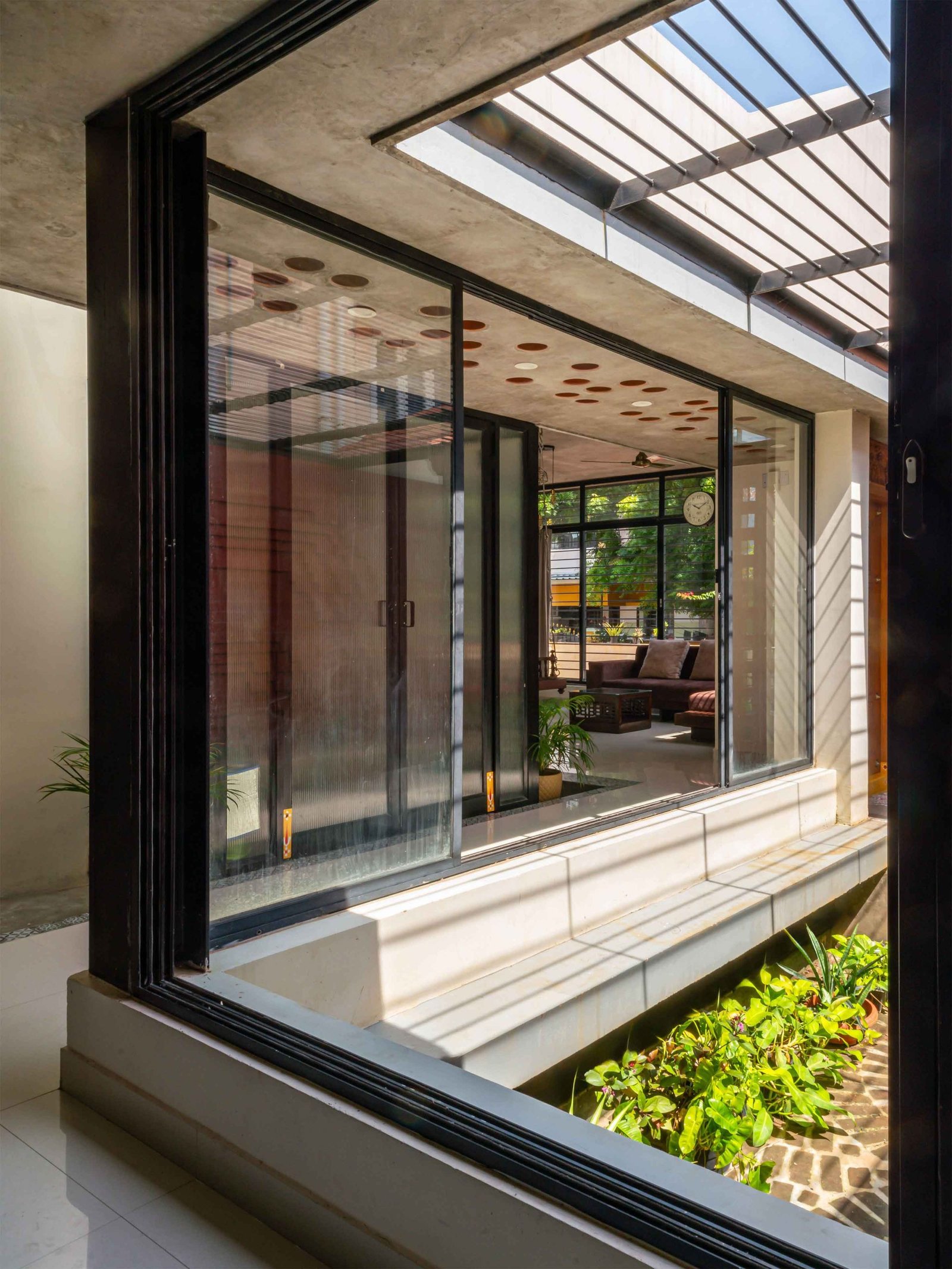
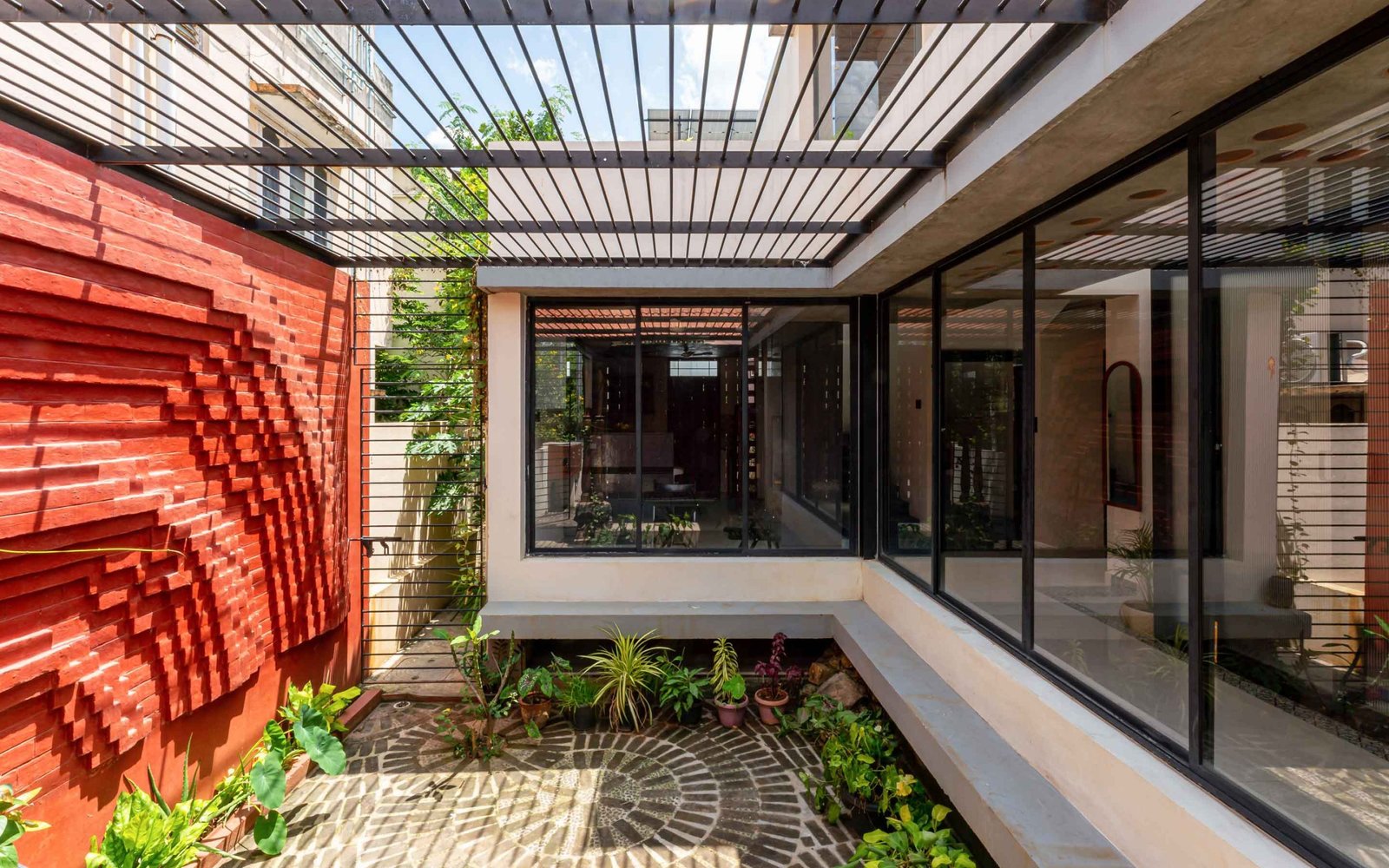
From the inside, the courtyard is clearly visible through the aluminium sliding glass windows in the kitchen, dining, and passage areas. The experience of natural light and shadow, its contrast, not only helps the courtyard serving air circulation and good views, it also establishes a visual connection between spaces.
4 Newel posts restored from a colonial-era building staircase were connected to appear as twin columns, sitting on random rubble rocks found at site during excavation. They work as a handy support while climbing steps and deceive as a chettinad column supporting the beam of the verandah’s clay tiled sloping roof (typical in olden days courtyard houses in the region).
Rocks piled up in the open corners to prevent the black exposed I-section columns from corrosion due to surface water runoff, besides making the floor of the living room and dining passage appear to be supported on the rocks when seen from outside.
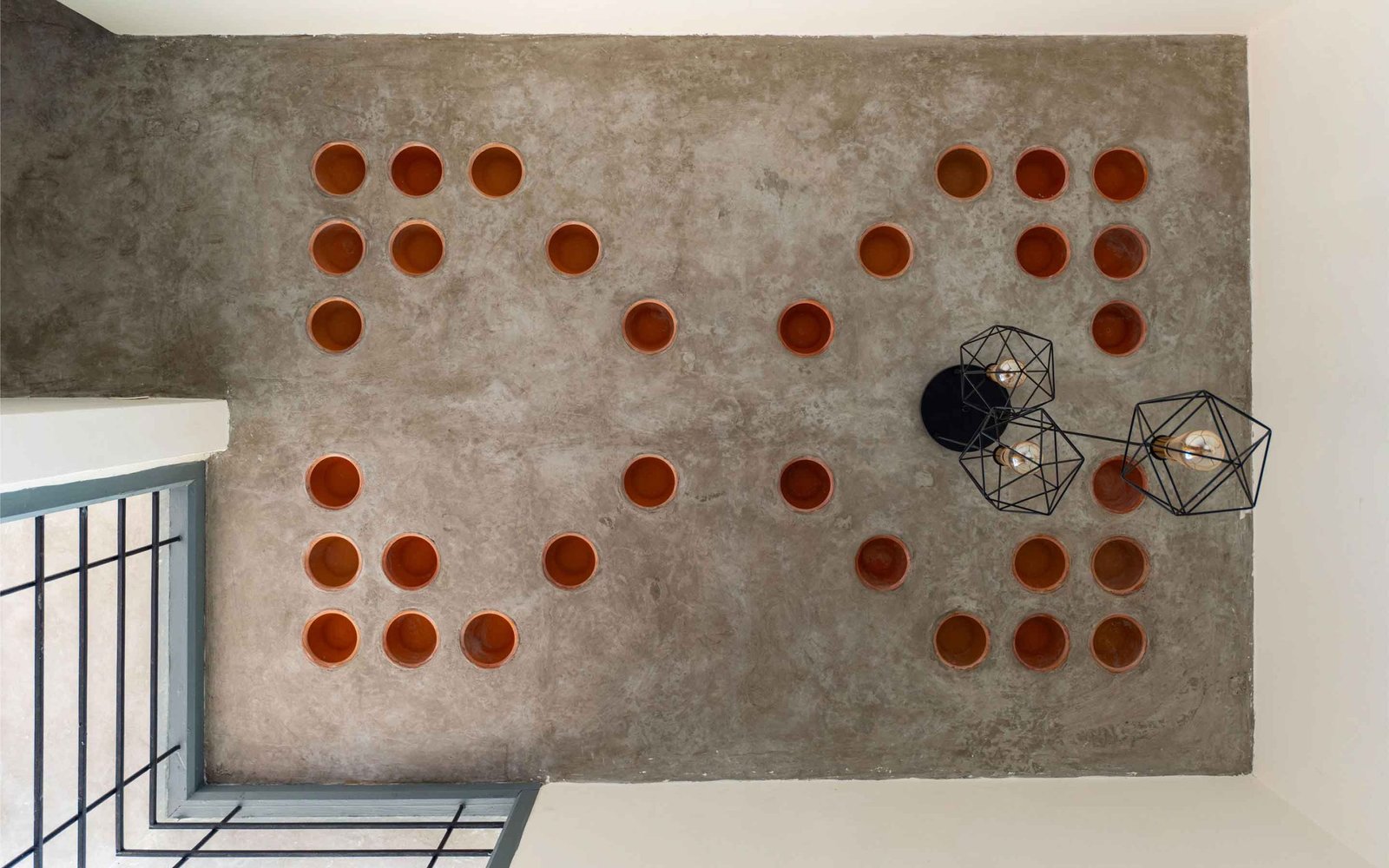
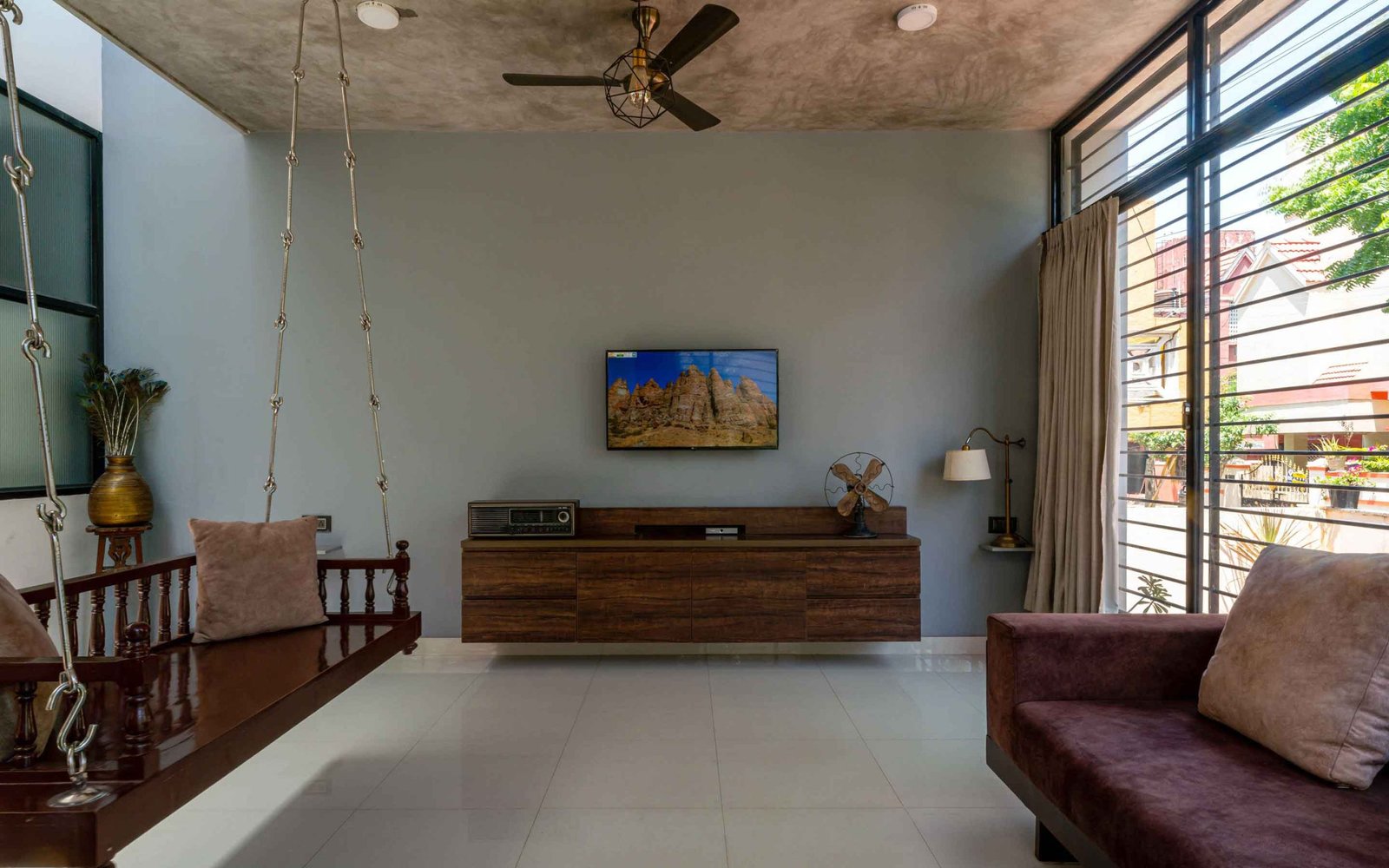
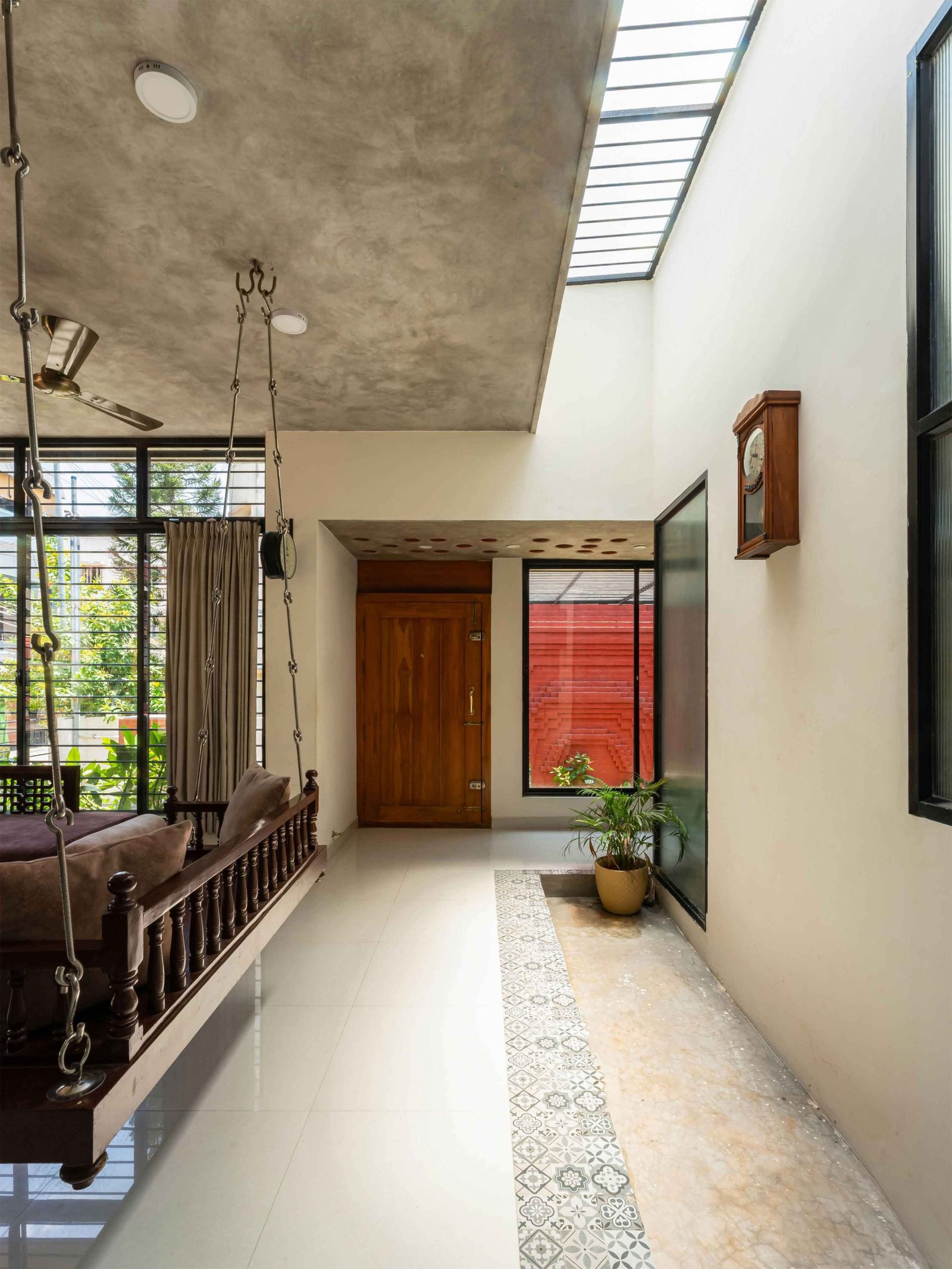
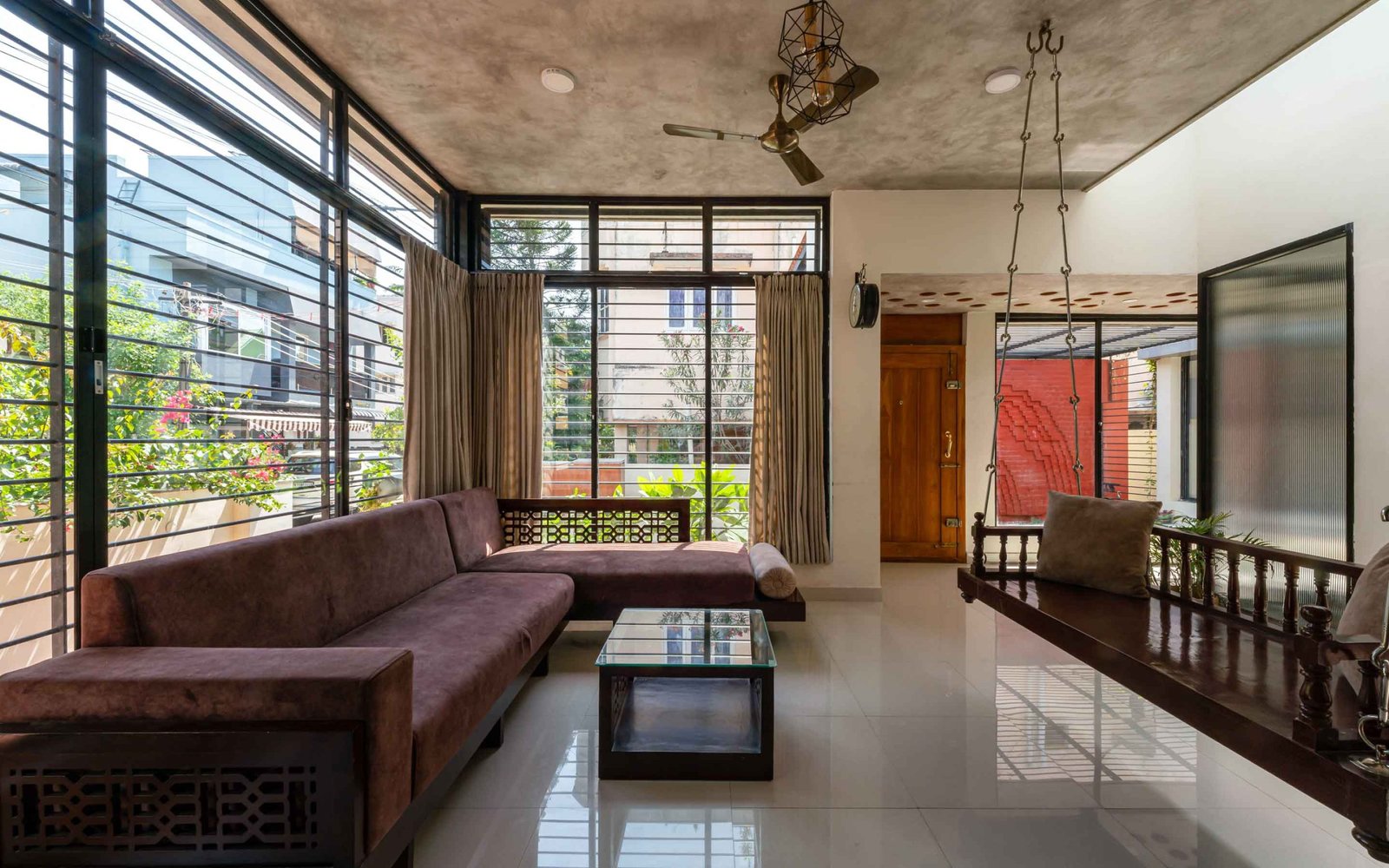
Living room ceiling is left exposed, with north and east walls full-height glass sliding windows highlighting no visible roof beams; they also contrast and balance with no opening south and west walls that shield from afternoon sun. With different levels of ceilings distinguishing the spaces, the filler slab ceiling using terracotta pots in the passage and stairwell breaks the monotony of space and cools the low-height ceiling. The design intends blending natural elements with practical and economical ideologies that tastefully resonates within a space called home.